
Quality & certifications
A certificate has a scope. A logo does not.
CE and FCC marks apply to a model and a market, not to a factory in general. ISO certificates apply to a management system and a site. We keep those scopes visible so a buyer can check what is actually covered.
Certification register
What each document covers.
The register below states the type of document and its scope. Verified copies, including certificate numbers and validity dates, are shared on request and matched to the model being purchased.
| Document | Type | Scope | How it is provided |
|---|---|---|---|
| ISO 9001 | Management system certificate | Quality management at the manufacturing site | Verified copy on request; site and validity stated |
| ISO 14001 | Management system certificate | Environmental management at the manufacturing site | Verified copy on request; site and validity stated |
| CE | Declaration / test reports | Specific model, directive and market | Declaration and supporting reports for the purchased model |
| FCC | Equipment authorization | Specific model and radio configuration | Grant or test report for the purchased model |
| UKCA | Declaration / test reports | Specific model and UK market | Declaration and supporting reports for the purchased model |
| RoHS | Compliance declaration | Materials in the shipped bill of materials | Declaration plus material evidence on request |
| BQB | Bluetooth qualification | Bluetooth subsystem and declared design | Qualification record for the radio design used |
| KCC / TELEC | Radio compliance | Specific model and national market | Certificate for the purchased model and market |
If a certificate does not exist for the exact model and market you need, it does not appear on a quotation as if it did. Certification is scoped and priced as a program activity.:
Quality system
Four controls that keep a program consistent.
Certification says the system is defined. These are the parts that affect a shipped remote.
Revision control
Drawings, BOM, firmware and test specifications carry revisions. A production order references exact revisions, so a change cannot slip in without a record.
Material verification
Critical components and cosmetic parts are checked against the approved sample per lot. A substitute part is a change, not a purchasing decision.
Functional test
Every unit is tested on a fixture against the released firmware. Test results are recorded per unit and summarized per lot.
Corrective action
Field or pilot failures are classified by cause and fed back into the design, fixture or work instruction. The record shows the fix, not only the complaint.
Reliability testing
61 tests, five families.
This is the full list from our reliability laboratory, not a selection from it. A program runs the subset its product, market and battery type require; the report names what ran and what did not apply.
12 tests
- 01Low-temperature storage
- 02Low-temperature limit operation
- 03High-temperature storage
- 04High-temperature limit operation
- 05High-temperature aging
- 06Constant damp heat
- 09Thermal shock
- 10Temperature and humidity cycling
- 11Salt fog
- 28MIC dust test
- 29Life-class water resistance
- 58Accelerated aging
15 tests
- 12Drop test
- 14Micro-drop
- 17Compression strength
- 18Key life
- 19Battery-door plug and unload life
- 20Battery-door fold and pack
- 21SMT component push-off
- 22Through-hole component pull-off
- 23Key pull-off strength
- 24Key return / stuck key
- 25Terminal insertion and withdrawal force
- 26Terminal insertion life
- 37Button press
- 38Key force and tactile coefficient
- 51Knock and shake
10 tests
- 27Anti-static (ESD)
- 43Limit voltage and cut-off voltage
- 44Working and quiescent current
- 45IR carrier frequency
- 46IR irradiance
- 47RF centre frequency and transmit power
- 48Remote control angle
- 49Power-on reset
- 50Abnormal operation (rapid multi-key)
- 59MIC aging life
11 tests
- 30Warm-water resistance
- 31Solvent resistance
- 32Cosmetic resistance
- 33Palmar perspiration resistance
- 34Pencil abrasion
- 35EMI oil adhesion
- 36Wear-resistant coating adhesion
- 39Paper-tape abrasion (RCA)
- 40Rubber abrasion
- 41Alcohol resistance
- 42Legend and coating adhesion
13 tests
- 07Low-temperature limit charging †
- 08High-temperature limit charging †
- 13Packaging drop
- 15Transport-packaging drop
- 16Vibration
- 52Battery reverse insertion
- 53Battery short circuit
- 54Battery fit (different cell sizes)
- 55Rechargeable overcharge †
- 56Rechargeable overcharge protection †
- 57Rechargeable over-discharge protection †
- 60Charge and discharge cycling †
- 61Rechargeable short circuit †
Selected per product, not copied across
An IR remote and a BLE voice remote do not run the same 61 tests. The program test plan marks each item as required, optional or not applicable, and the report keeps that marking.
Items marked † apply only to products with a rechargeable battery.
Laboratory
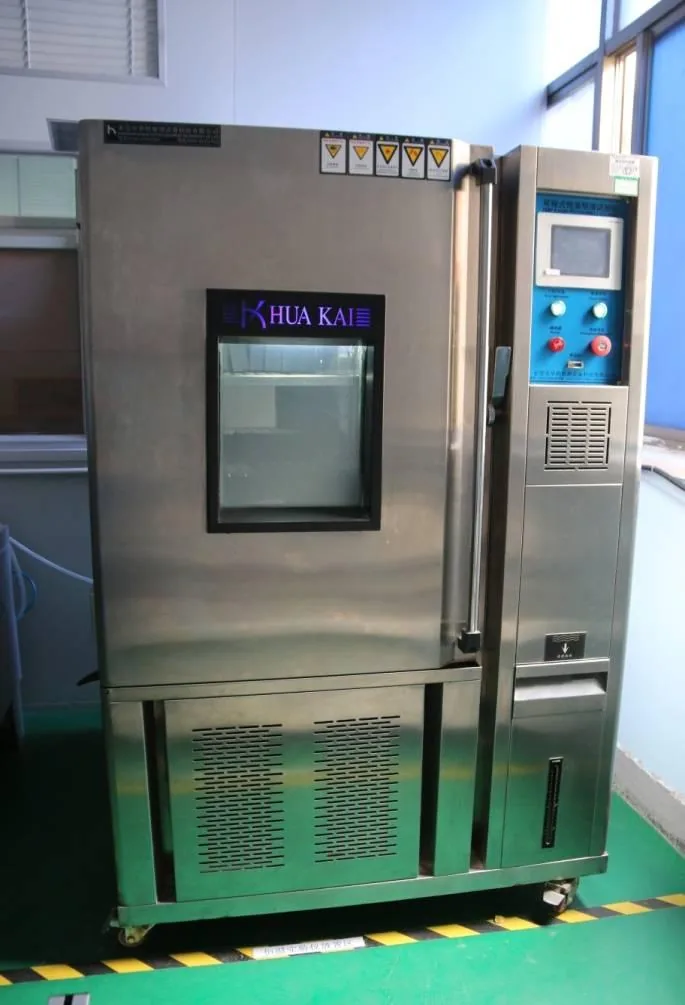
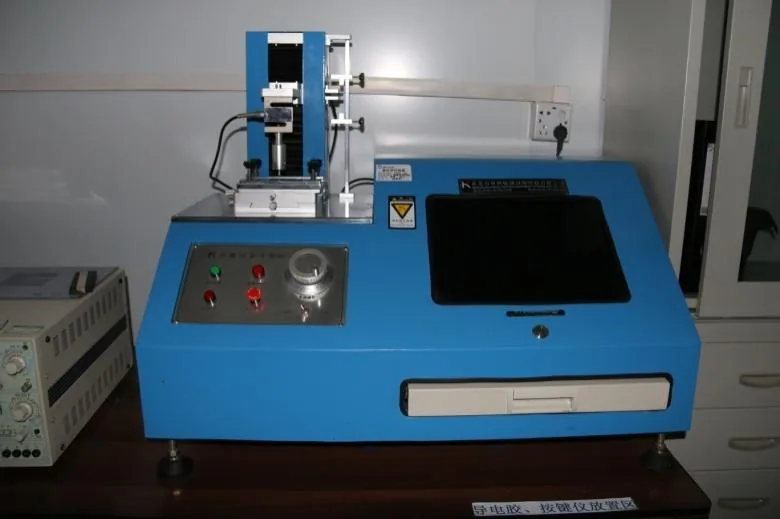
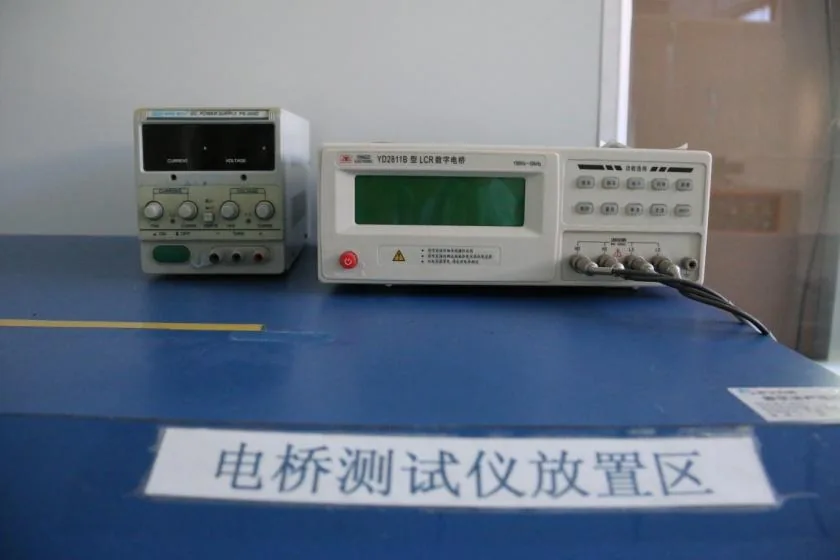
29 instruments, in the same building.
The equipment that runs the tests above. If a program needs a method we cannot run in-house, we say so before quoting it rather than after a failure.
8 instruments
- Constant temperature and humidity chamber
- Constant temperature drying oven
- Precision oven
- Thermal shock chamber
- UV aging chamber
- Salt fog chamber, neutral salt spray
- High-temperature tester
- Mold temperature controller
7 instruments
- Abrasion tester
- Key rebound tester
- Paper-tape abrasion tester
- Tension and compression tester
- Vertical / horizontal flame tester
- Hardness tester
- Transport simulation vibration table
7 instruments
- Digital bridge
- Transistor curve tracer
- Polarity tester
- Sweep generator
- ESD tester
- Surface resistance and voltage tester
- RoHS screening
7 instruments
- 3D projector
- High-power microscope
- Standard light box
- Film thickness gauge
- Height gauge
- Adhesion tester
- Melt flow rate tester
Laboratory inventory. Certificates of calibration sit in the quality file and are shared with a document pack.:
Verification
How to check a certificate in five minutes.
A buyer should not have to trust a PDF pasted into a brochure. These are the checks we expect, and the ones we make on our own documents.
Match the model
The certificate or grant should name the model, radio configuration and variant you are buying. A sibling model is not the same scope.
Match the market
CE, UKCA, FCC, KCC and TELEC are not interchangeable. The document should match the country the product ships to.
Check the issuer and date
Look up the issuing body and the certificate number. Confirm the validity date and whether the scope covers the manufacturing site.
Ask for the test report
A declaration without supporting reports is a statement of intent. The report shows what was measured and on which sample.

Market matrix
What a target market usually requires.
This is a planning aid, not legal advice. The final requirement list is confirmed with the test house for your product category and radio.
| Market | Radio / EMC | Substances | Notes |
|---|---|---|---|
| European Union | CE — RED, EMC, LVD where applicable | RoHS, REACH | Declaration plus technical file; importer details required |
| United States | FCC Part 15 (radio and unintentional radiator) | State-level rules may apply | Equipment authorization depends on radio module and power |
| United Kingdom | UKCA | UK RoHS | Separate from CE; confirm the current acceptance rules |
| Korea | KCC | KC chemical rules where applicable | Local representative may be required |
| Japan | TELEC / MIC | J-Moss | Radio law approval before sale |
| Australia / NZ | RCM | — | Supplier declaration and compliance folder |
Questions
Quality & certification FAQ
Can you put our brand on the certificate?
Does a new color or logo require recertification?
Who owns the test reports?
Do you certify the factory or the product?
Related: Manufacturing Reliability & Hygiene
Document request
Ask for the document, not the logo.
Tell us the model and the market. We will send the certificate, the report and the scope — or say plainly that it does not exist yet.